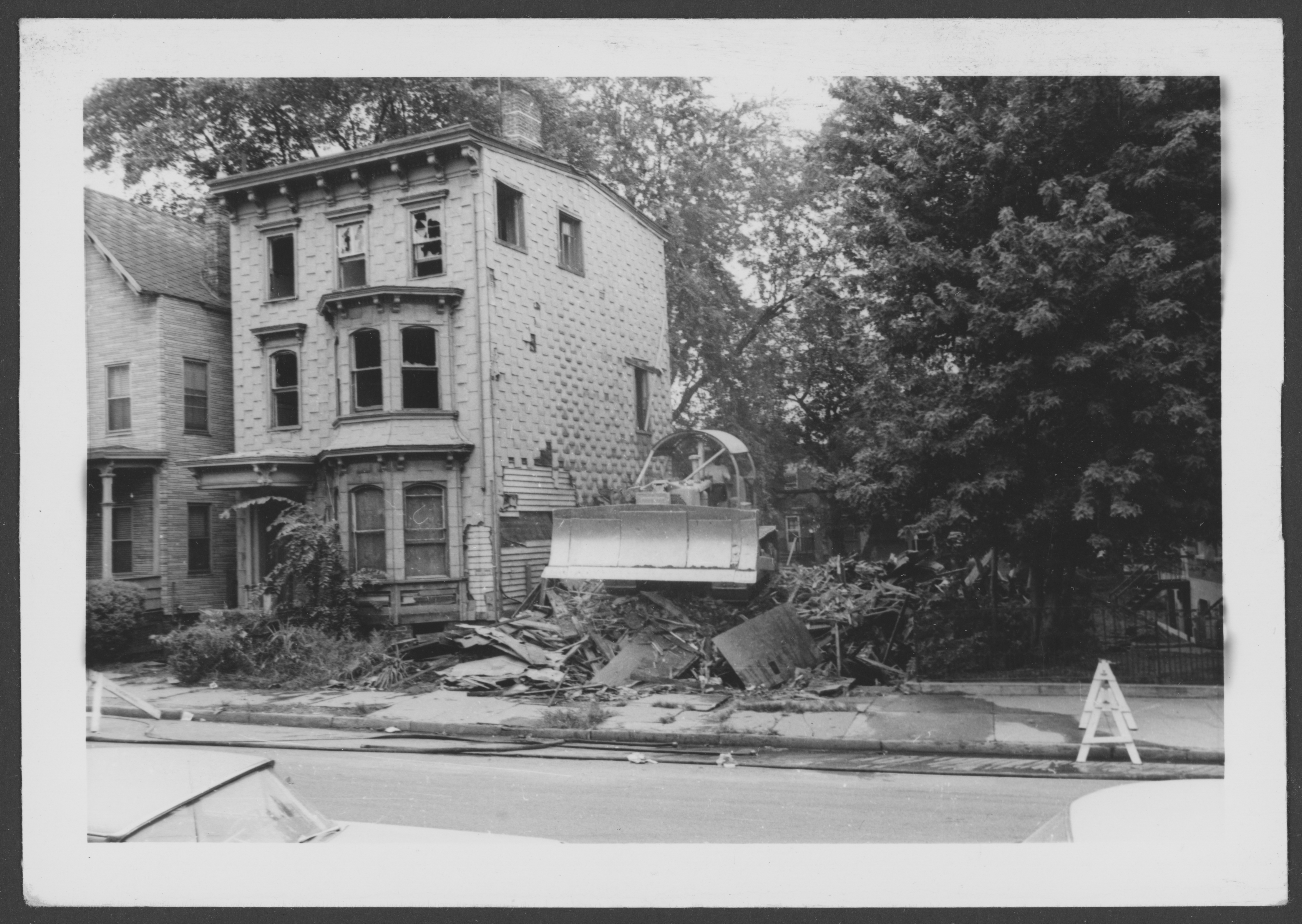
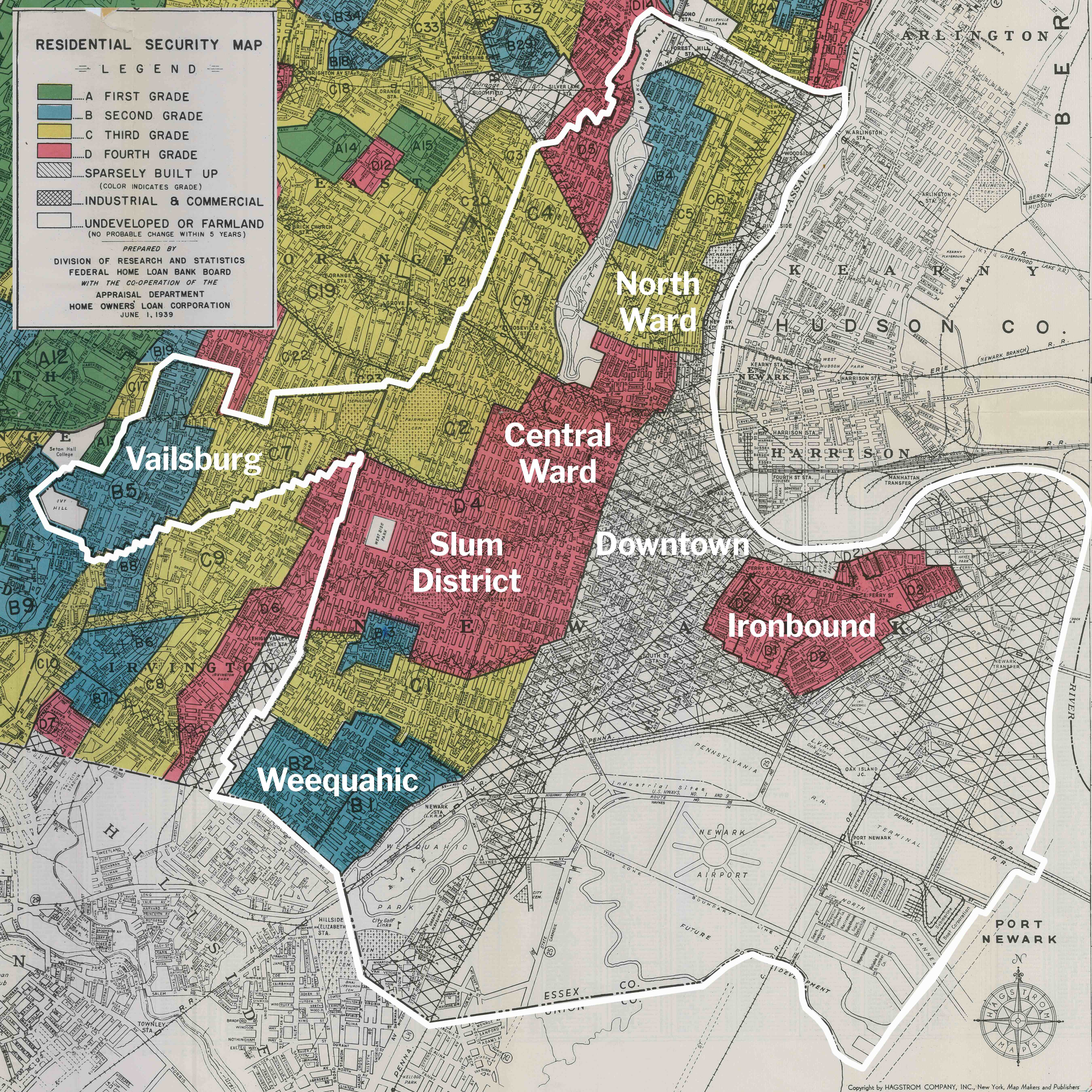
Map of All Partially Demolished Street Scenes


‣ Click icons for thumbnail images.
‣ Click thumbnails for photo comparison with contemporary Google street view.
‣ Thumbnails launch photo comparison on new page.

Travelers' Map is loading...
If you see this after your page is loaded completely, leafletJS files are missing.

Map color key accurate as of summer 2026.
Map will be updated as the city continues changing.

S side James St looking W from opposite #18 is now a parking lot on July 21, 1960

Tony Russo (pseudonym) writes:
“That car in the foreground looks just like the car I owned. When they built those monstrous skyscrapers in the 1970s, the work crews were all Italians. They were mafia. They hired vandals and homeless to go in these homes and set them on fire, in order to justify demolition. Everybody lost. Nobody won. Nobody won because the parking lot and skyscraper they built in place of these homes is now empty and has so few tenants. You could say that the bad blood came around. The animals. They tore up our beautiful neighborhood for this.”

S side Orange St looking SW from NE corner Jay on July 2, 1961

“​Geozinger” (username) writes:
“This is a treasure trove of pics from back in the day. I love these ‘slice of life’ candids; showing everything frozen in time and the sometimes odd juxtapositions of objects.

“For as downtrodden as the area may be described, there seems to be decent looking cars on the streets. Many of the pics show cars 3-4 years old. On the other hand, cars were usually pretty much finished after three years of daily use…”

S side Edison Place looking SE from NW corner Mulberry on July 2, 1961

Robert Singer writes:
“My father owned a business around the corner from here on Market Street. I used to shop here on Mulberry Street when I was a teenager. As you rounded the corner from Market to Mulberry, the street was full of old industries, bargain shops, and the like. All of it is long since gone.”

#18-26 Fulton St, Hotel Tremont & 4 houses on June 24, 1960

June Williamson writes about her grandfather’s house at 26 Fulton Street, the townhouse at far-right of above image:
“My grandfather landed in Newark (from Scranton) as a young man in the depths of the Depression. In the 1930 Census, his address is 26 Fulton Street #16 (lodger of Katherine Graves), which is now, of course, a parking lot! He worked as a coil winder for Western Electric.”

N side James St looking W between Eagles & Burnet on June 10, 1960

James Hollaway writes:
“I grew up on this street. On the corner was the Armel “French Ice Cream” shop. Next door there was a candy shop. And next to that a Chinese laundry. I bought ice cream and candy there ever day. One block down was Frank’s Meat Market. When Mr. Frank grew old and left town during white flight, I bought his shop. I had just returned as a GI from the Vietnam War, and it was the first business I owned. I put my heart and soul into that place, selling meat to all the neighbors on my street. One day, some youths came into my shop and held me up at gunpoint for my money. That was it for me. I closed my shop the next day. My old meat shop is now a corner store church. It belongs to my neighbor Bernard Wilks from Dominion Fellowship Ministries.”

Bill Chappel writes:
“One day the City came and demolished the ice cream shop, the candy store, and the Chinese hand laundry. My house is right next door and shared a party wall. I was afraid that my house would collapse along with it. The laundry is now a vacant lot and our neighborhood dog park. The City owns the land, and it’s their job to mow the lawn. A few years ago, I called the City to tell them this, and they told me they had forgotten this land was still theirs. So I took it on myself to mow the grass with the machine Mr. Hollaway bought me. As I get older, keeping this vacant lot clean gets more and more difficult.”

Looking SW at W side High St corner James St on June 10, 1960

Anne Mabry writes:
“The row house next to the corner apartment building at the corner of James and MLK we romantically called the “Romeo and Juliet House.’ By the early 1990s, all that was left was the facade of the building. The third floor had a window that resembled a crumbling balcony, from which Juliet would listen to the poetic passionate speeches of Romeo.”

Essex St looking N from James St on June 10, 1960

Anne Mabry writes:
“This little wood-frame house was tucked between the Rutgers-Newark graduate dormitory (to the left) and the Rutgers parking lot (to the right) when we moved to James Street in 1991. We never learned who lived there except it was abandoned and owned by Rutgers. Possums lived in the basement. You can guess what happened next. Another ‘demolition by neglect.’ The tiny footprint the little green house occupied was swallowed up by the parking lot. Not a trace remains except for a piece of the decorative roof cornice that we saved and sits on our back porch.”

The Little Green House on Essex Street:

Lackawanna Railroad under Roseville Ave, looking east on June 9, 1962

Dan O’Flaherty writes:
“This is where the station was. It closed around 1985. In the fifties, on Thanksgiving, the Mummers band disembarked here and marched down Roseville Avenue to the Bamberger’s Thanksgiving Day parade. I think that was how Santa Claus got to Newark.”

S side Orange St looking SW from opposite Plane St on May 28, 1962

Anne Mabry writes:
“The corner meat market was another fixture in our neighborhood. This one at the corner of University Avenue and Orange Street catered to those who had a penchant for freshly processed pork. As the city’s demographics changed from Polish and Italian to Black and Muslim, the kinds of businesses changed, too.

“The corner store used to be called Engelkorn’s. They sold hams, bacon, and pork. This corner store is now Unity Brand Halal. They now sell turkey, lamb, and chicken.”

N side Watson looking NW from SE corner Peshine on April 21, 1962

Jane Davis writes:
“The second house in the 1962 photo labeled ‘N side Watson looking NW from SE corner Peshine’ is the house I grew up in!!!!! My father made those brick steps to replace the wooden ones that were there. I have not seen this house in many decades – the last house torn down on Watson Ave for the highway.”

The brick steps that Jane Davis’s father built: